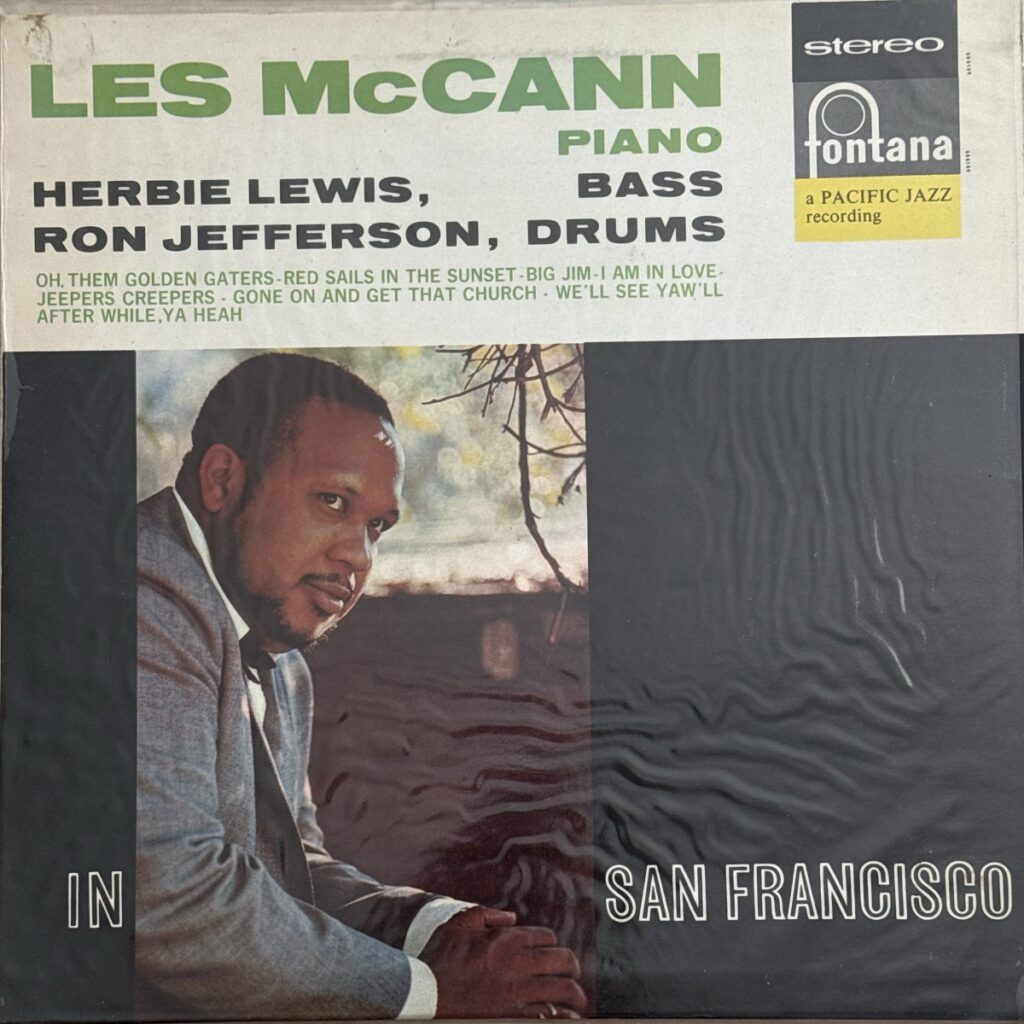
Some batches sort themselves out. In the latest one to arrive at the shop, between a Basie playing Hefti and a live Getz with Astrud Gilberto, the same name appeared twice in two different roles: Les McCann leading his trio in a San Francisco club, and Les McCann in the shadows, writing and arranging an entire album for organist Richard “Groove” Holmes. Both, moreover, share the same peculiarity on the label. They are not the American Pacific Jazz issues, but the editions Fontana manufactured in Holland for the European market.
That coincidence deserves more than a product listing.
A cool label that went to church
Pacific Jazz was born in Los Angeles in 1952, founded by Richard Bock, and for much of that decade its name was almost synonymous with the West Coast sound: Gerry Mulligan’s pianoless quartet, Chet Baker’s trumpet, clean arrangements, restrained dynamics, lots of light. That is why it is so telling that, in 1960, the artist Bock signs, and who ends up becoming the label’s best seller, is a pianist from Kentucky who plays as if he were sitting in the back pew of a Baptist church on a Sunday morning.
Les McCann did not come to cool anything down. His piano draws on gospel, blues and boogie, and fits with what Horace Silver or Bobby Timmons were doing on the other side of the country under the soul-jazz label. The interesting thing is that Bock did not tame him. He recorded him as he was.
San Francisco, December 1960
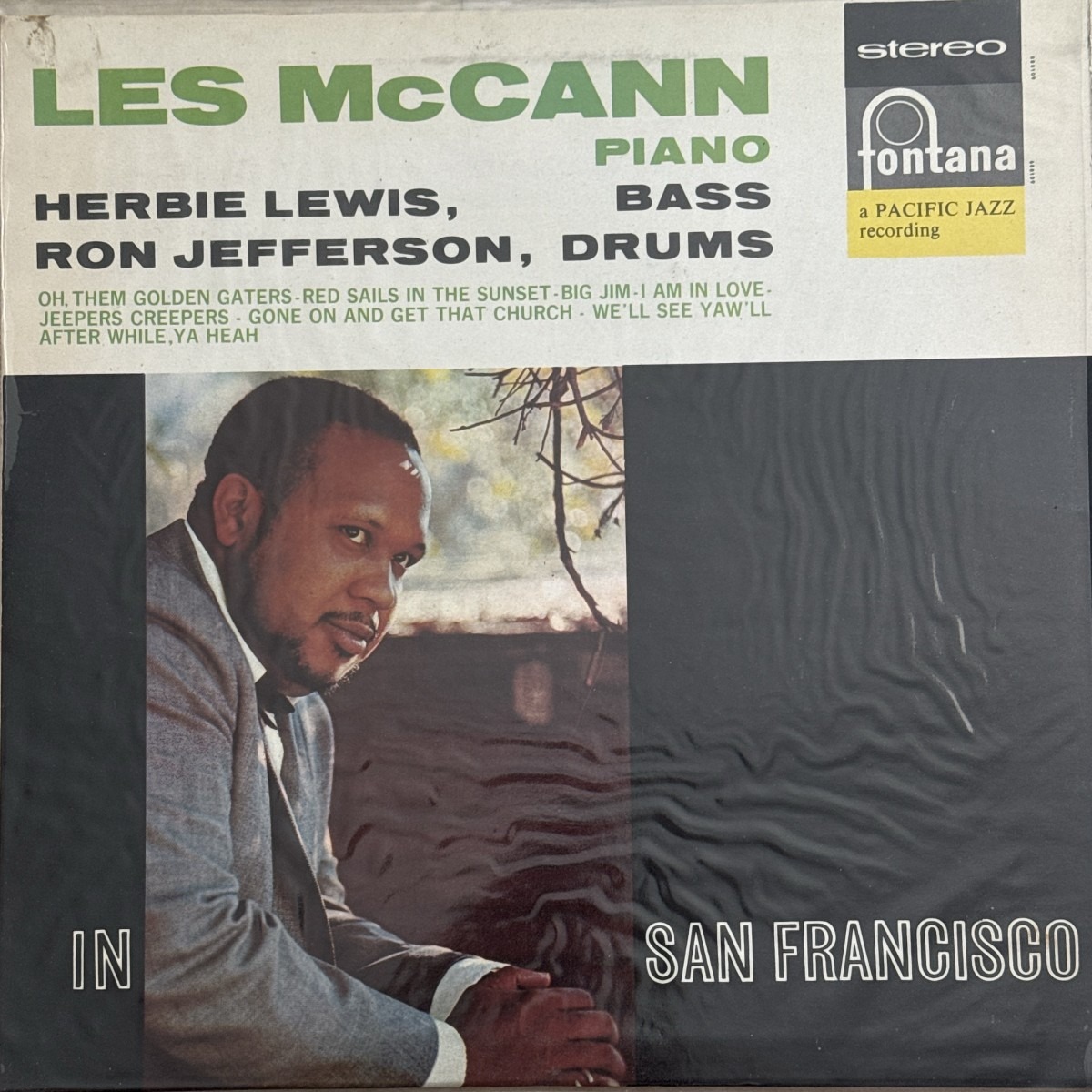
For two and a half weeks in December 1960, McCann’s trio, with Herbie Lewis on bass and Ron Jefferson on drums, held the stage at the Jazz Workshop in San Francisco. Those nights produced the record Pacific Jazz released in 1961 as PJ-16, with liner notes by Leonard Feather. The titles alone tell you where the pianist’s head is: “Oh, Them Golden Gaters”, “Gone On and Get That Church”, a farewell barely a minute long called “We’ll See Yaw’ll After While, Ya Heah”. And in between, standards such as “Red Sails in the Sunset” or “Jeepers Creepers” stretched to six and eight minutes, taken onto his own ground without asking permission.
It is a club record in the best sense: you can hear the audience, the trio responds, and form matters less than pulse. Our copy is the Fontana stereo pressing. Les McCann In San Francisco is in VG+ condition, both record and sleeve.
The same pianist, one step back
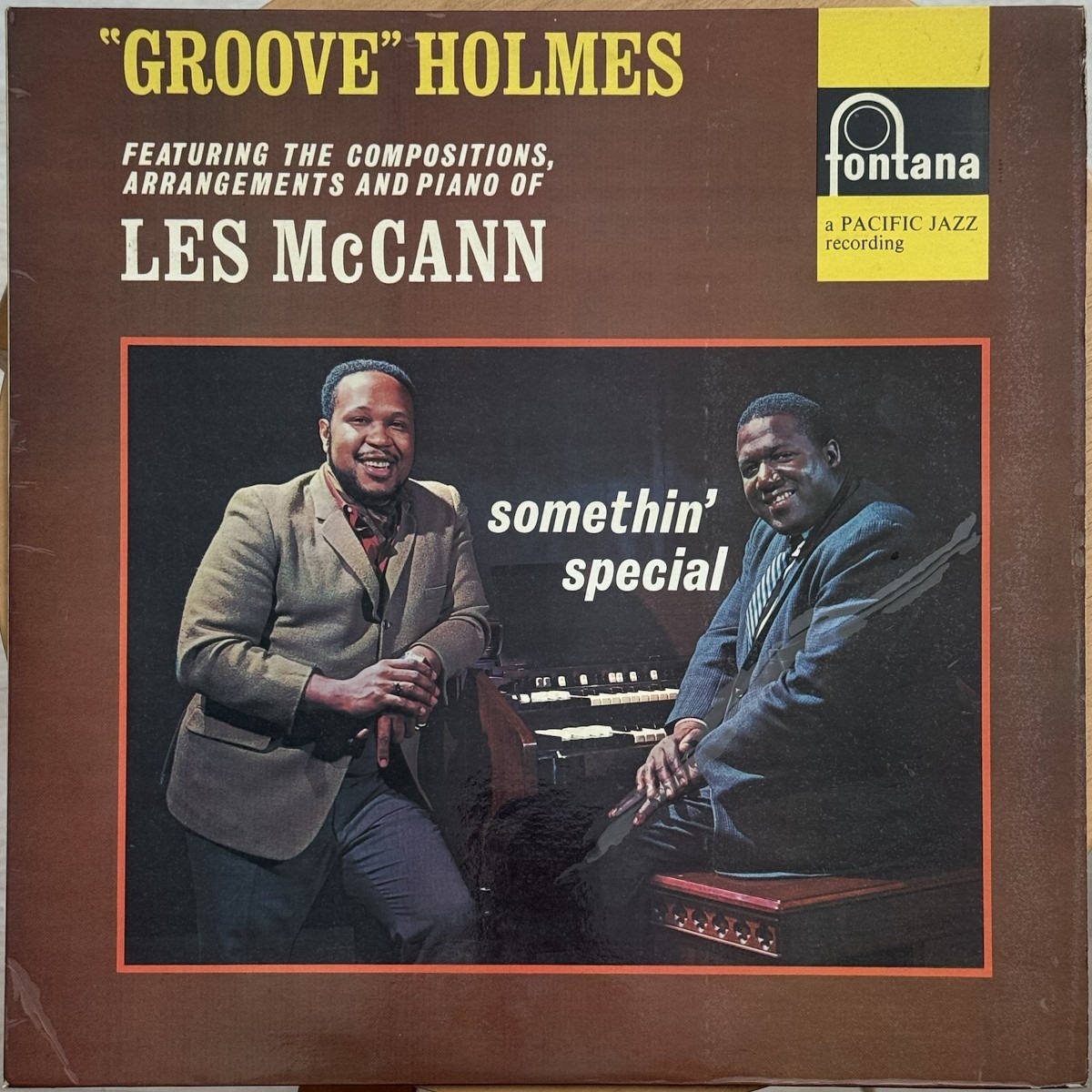
A year and a half later, in April 1962, McCann walks into the Pacific Jazz studio in Los Angeles not as leader but as author. The record belongs to Richard “Groove” Holmes, a New Jersey organist who had just joined the label, but the title says it openly: featuring the compositions, arrangements and piano of Les McCann. Almost the entire repertoire is his, except for Ellington’s “Satin Doll” and the traditional “Blow the Man Down”; on guitar is a still little-known Joe Pass, and Ron Jefferson is back on drums.
Heard alongside the San Francisco live set, Somethin’ Special reveals something McCann rarely showed on his own records: his ear for building an atmosphere in service of someone else. Holmes’s Hammond organ takes centre stage, and the piano steps aside, comments, pushes. It is the same language, but with the voice handed over. Somethin’ Special is the 1962 mono edition, record in VG+ and sleeve in VG.
What a Dutch Fontana is
Fontana was the label the Dutch Philips group launched in 1958 to, among other things, issue licensed recordings from American labels in Europe. Pacific Jazz was one of them: several McCann titles came out on the continent and in the UK with Fontana catalogue numbers, manufactured at Philips’ plants in England or Holland. Both our copies come from the Dutch one, and it shows in details a collector recognises at once: the label’s own numbering, with Philips’ ZL suffix for mono and ZY for stereo, and, in the case of Somethin’ Special a cover laminated on the front only.
For years these editions have been treated as the poor cousin of the American original, something you bought when the black-label Pacific Jazz was beyond your budget. It is an unfair reading. Philips pressed to a very high standard, and these copies had a life of their own: they were the ones played in European clubs and living rooms in the sixties, the ones that introduced McCann to anyone who could not import records from Los Angeles. Their history is their own, not borrowed.
The same impulse, from New York
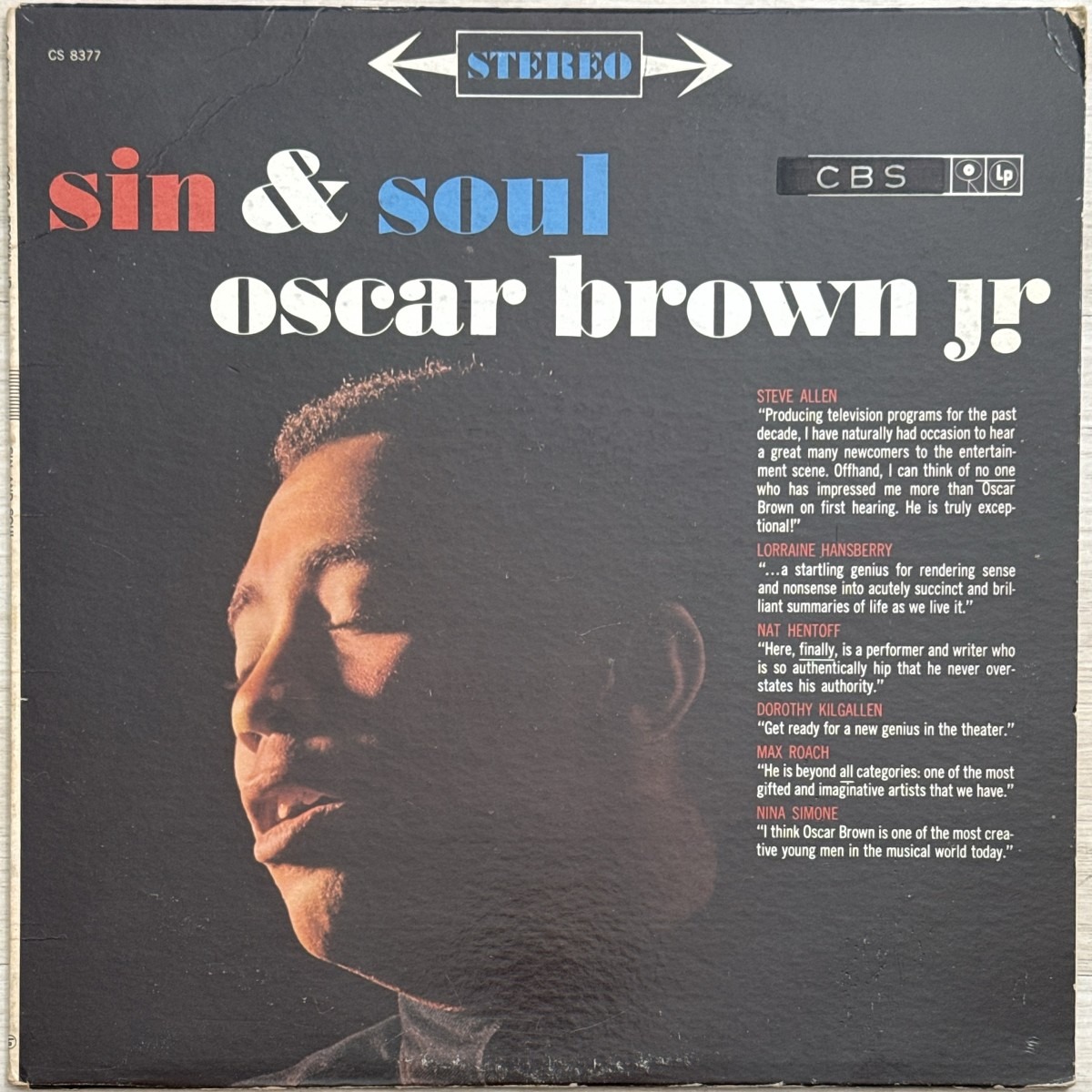
The same batch brought in a record that makes the perfect counterpoint. Oscar Brown Jr. recorded Sin & Soul for Columbia between June and October 1960, just as McCann was playing the Jazz Workshop, and released it in early 1961. It is the same spirit of the era, jazz looking back to the church and the blues, but from a giant label and with a different ambition: Brown put lyrics to Nat Adderley’s “Work Song” and dared to take on “Bid ’Em In”, a re-creation of a slave auction. On the cover, Nina Simone, Max Roach and Lorraine Hansberry signed their praise. Our copy is the stereo reissue from around 1965 with the 360 Sound label. Sin & Soul is in VG+, record and sleeve.
Pacific Jazz and Columbia, an independent West Coast label and a New York multinational, reaching the same place by different roads in the same year.
Much of the American jazz heard in Europe did not cross the Atlantic in its original sleeve, but in copies made here under licence. Looking down on them means forgetting that, for many listeners, that was the first and only version that ever existed.
If that moment when jazz went back to church interests you, take a look at our records in Soul-Jazz.