
Who does the sound of an orchestra belong to: the man who leads it, or the one who decides how every bar sounds? The question stops being rhetorical the moment you set Jimmie Lunceford's records from before 1939 next to the ones that came after. The band still carried the same names on the cover. It sounded different.
A trumpeter who also wrote
Sy Oliver was born in Battle Creek, Michigan, the son of a piano teacher and a multi-instrumentalist who gave saxophone demonstrations at a time when almost nobody played that instrument outside a marching band. He left home at seventeen to play with Zack Whyte and Alphonse Trent, and it was there that he also started writing arrangements. In late 1933 he joined Jimmie Lunceford's orchestra as a "growl" trumpeter, that raspy, almost spoken attack that set his sound apart from any other soloist of the era. But what changed the band wasn't his trumpet. It was his pencil.
The two-beat: precision before showmanship
Among collectors, the style Oliver installed in Lunceford's band has its own name: the two-beat. A medium tempo, a contained pulse, every section entering exactly where it should without needing to raise its voice to prove it. While Basie let the rhythm run and Goodman built the night around his soloists, Lunceford — through Oliver's arrangements — bet on the ensemble as a mechanism: sixteen musicians sounding as if they breathed in unison. Lunceford also demanded punishingly long rehearsals, not just for tuning, but to polish a stage show as choreographed as the music itself: trumpeters tossing their horns into the air and catching them in unison, a vocal trio — Oliver himself among them — closing numbers with glee-club harmonies. None of it sounded like improvisation. It was the same arranger's craft, applied to the stage.
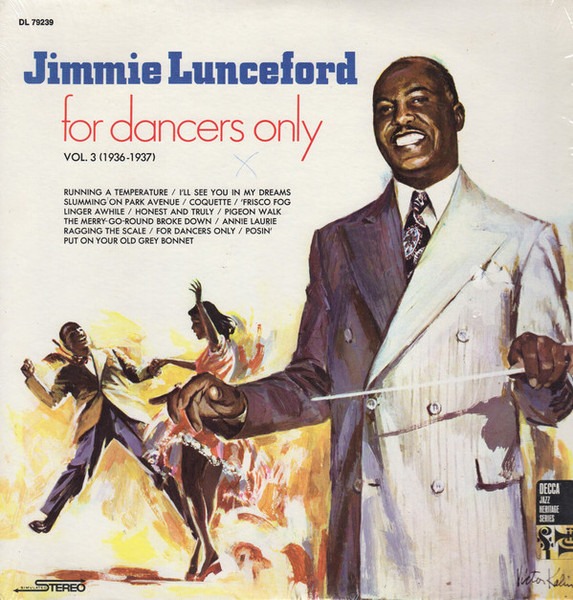
For Dancers Only sums up that approach better than any other tune in the band's catalogue: built, as its own title makes clear, for dancing before showing off, and resting entirely on the arranger's craft.
1939: Dorsey buys a signature
In August 1939, Tommy Dorsey brought Oliver into his own orchestra. It wasn't just any signing: Dorsey was after exactly what Lunceford was about to lose — a sound with the authenticity of the Savoy Ballroom that his band, already established and with a massive white audience, couldn't quite reach on its own. It was also, in the 1939 industry, a rarity: a Black arranger shaping the artistic direction of one of the country's most popular white bands. Oliver wrote and sang for Dorsey, penned original numbers like "Opus One," and months later took over arranging the up-tempo numbers for a singer newly arrived in the band: Frank Sinatra. Lunceford, meanwhile, kept recording. It never sounded the same again.
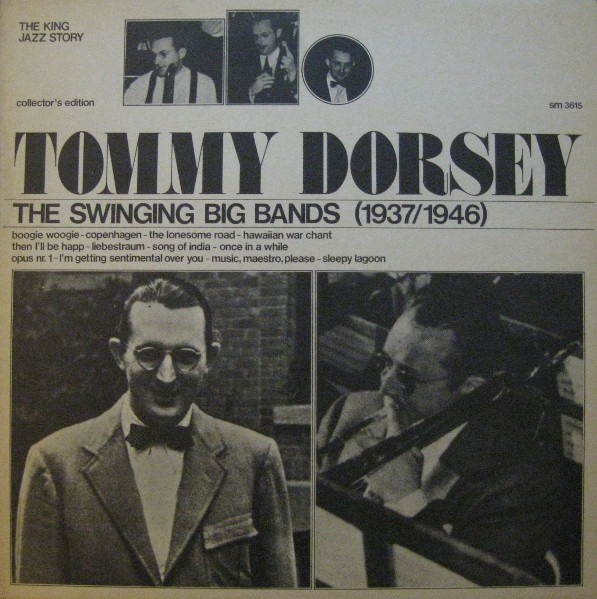
The Swinging Big Bands, from Dorsey's own orchestra, gathers recordings from 1937 to 1946 — the title itself unwittingly frames the before and after of that arrival.
What you can still hear today
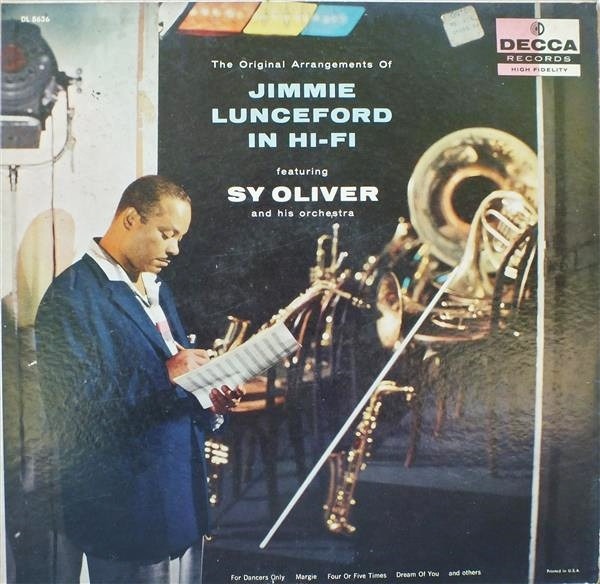
Oliver's signature didn't stay buried in records from the thirties and forties. Decades later, Oliver himself led an orchestra again to re-record his original Lunceford arrangements, this time with better sound and the distance of someone who knew exactly what he had been building back then. The Original Arrangements Of Jimmie Lunceford is the clearest document of all this: the arranger, with Lunceford's name off the cover, proving that the two-beat was never the bandleader's. It was his.
A well-made arrangement outlives the name on the record's cover. That's what separates a true arranger from a mere orchestrator, and it's also, nearly a hundred years on, the only thing that really tells one swing band apart from another.
If you come across a pressing from this era — Lunceford, Dorsey, or any other orchestra that passed through a good arranger's hands — it's worth a second look. Here are a few.